

Rapid Vertical Validation:
Ferndale Seasonal
From Blizzard to Business in 48 Hours: How we leveraged LLMs and rapid deployment to build a profitable service brand over a weekend.
Time to Launch
< 48 Hours
Investment
$12.00
Outcome
Validated scalable blueprint
1. The Thesis: Architecture Over Labor
The Ferndale Seasonal project was an experiment in rapid vertical validation. Most founders get stuck in feature creep, building complex tools for problems they haven't proven exist. We set out to prove that with a $12 budget and 48 hours, we could architect a service business that generated $300 in net revenue before the first snowflake hit the ground in Detroit.
The Goal: Transition from a person with a shovel to a Managerial System that handles lead gen, quality assurance, and dispatching while maintaining a healthy managerial cut.
2. The Tech Stack: AI-Driven Polish
To compete with established landscaping firms, the brand needed to look institutional, not amateur. We leveraged a High-Leverage stack to bypass weeks of design work:
Design Engineering: We used LLMs (Gemini/Claude) not just for code, but for Color Theory. By feeding the AI industry-standard landscaping sites, we generated a custom Tailwind CSS framework that communicated Reliability and Safety.
Asset Syntheticism: We used generative AI to create high-fidelity background images and gradients. This allowed for professional-grade web design without the overhead of a photographer or a graphic designer.
The 24-Hour GTM Window: We identified the Market Trigger—the 24-hour period before a major weather event. Using this, we deployed a multi-channel social engine (Nextdoor, Facebook, Reddit, Instagram) to capture intent exactly when the pain point was highest.



3. The Human Friction: High-Resolution vs. Low-Resolution
The greatest challenge wasn't the code or the marketing; it was the human interface.
"We business-dumped into someone who just wanted to shovel driveways."
As a CTO/Principal level engineer, your brain operates in High Resolution—you see the systems, the scaling, the marketing loops, and the future pivots. However, we learned a hard lesson in Partner Alignment:
- The Over-Explanation TrapWe tried to coach a contractor to be a partner. We shared the Vision when they just wanted The Task.
- The LessonYou cannot coach someone to care about the North Star if they are only there for the hourly rate. This friction taught us that to scale, you must build idiot-proof systems, not better partners.
- Standing on BusinessWe had to learn to protect our energy. If a partner or contractor is low-resolution, you don't over-explain—you move on.
4. The Unit Economics: The Managerial Cut
We established a rigid pricing structure to ensure the system remained profitable regardless of the labor involved:
This structure proved that the value isn't in the shoveling; it’s in the Dispatch and Trust.
5. The Seasonal Pivot: The One-Vertical Rule
A common failure point in startups is the Feature Trap—trying to be everything to everyone at once. While Ferndale Seasonal was born in the snow, the system was designed for modularity.
- The Seasonal Roadmap: The infrastructure built for snow (Dispatch, Billing, Lead Gen) is the exact same infrastructure needed for Lawn Care in the summer and Leaf Removal in the fall.
- The Discipline of Focus: The temptation is to offer power washing, gutter cleaning, and landscaping all at once. However, we learned that validation requires picking one vertical and winning it. You don't need a full feature set; you need a single, high-impact solution that works.
- The Strategy: Pick one vertical per season. Validate it. Prove the unit economics. Only then do you move the Managerial Cut logic to the next seasonal trigger.


6. The Minimum Wage CTO: A Lesson in Worth
One of the most profound takeaways was the reality of the Founder's Hourly Rate. Even with a functional, automated-looking front end, a Minimal Viable Business still demands manual heavy lifting in the early stages.
The Reality Check
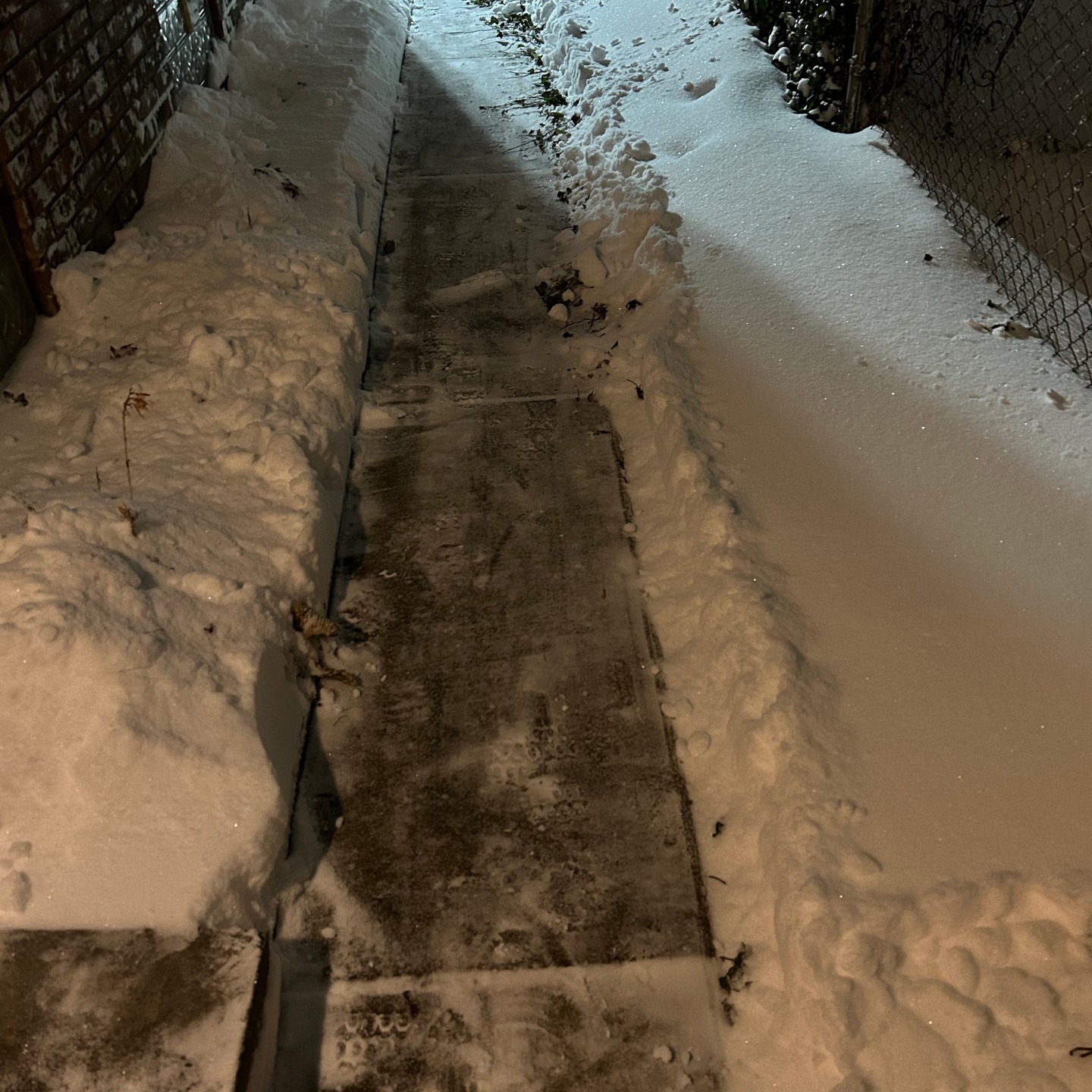
Despite the $300 in revenue, the time spent on dispatching, quality assurance, and handling unhappy customers meant we were essentially earning $10 an hour for our time.
Knowing Your Worth
This experiment reinforced the importance of pricing for value. When a customer complained that $45 wasn't worth the shovel, the response had to be rooted in the system's worth: "Salting is an extra $15. Ice chipping is an extra $30. We know the value of the work we provide."
The Automation Mandate
To scale, the CTO must move from Dispatching to Systematizing. If the goal is to stop earning $10 an hour, the next step is building a self-correcting loop where contractors verify work via photos that automatically trigger payments and marketing posts.
7. The Crossroads: Growth vs. Exit
At the end of the 72-hour cycle, we stood at a crossroads that every founder eventually faces:
- Iterate and Scale: Grow the contractor pool, move into paid advertisements (now that we have the ammunition of successful job photos), and automate the dispatch logic.
- The Affiliate Model: Sell the leads to existing snowplow companies. We met reliable people with trucks who valued our marketing engine more than their own. In this model, we move from Business Owner to High-Value Funnel Architect.
- The Case Study Exit: Recognizing that the true value of this 48-hour sprint wasn't the $300, but the validation of the process.
8. Final Verdict: Standing on Business
The Ferndale Seasonal experiment proved that a Fractional CTO is more than a technical lead—they are a Growth Catalyst.
- Technology is a Shortcut: We used LLMs to bypass the need for artistic talent and weeks of design work.
- Story Beats Product: People bought the narrative of the "Local, High-Tech Neighborhood Shoveler" before they ever saw a shovel.
- The CTO Edge: By applying Principal-level engineering logic to a low-tech problem, we uncovered inefficiencies that local competitors had missed for years.
"The takeaway for our clients? If we can turn a snowstorm into a profitable business engine in 48 hours, we can certainly find the market triggers and technical shortcuts needed to scale your startup."



Want to build something fast?
Let's apply this same agility to your next project.